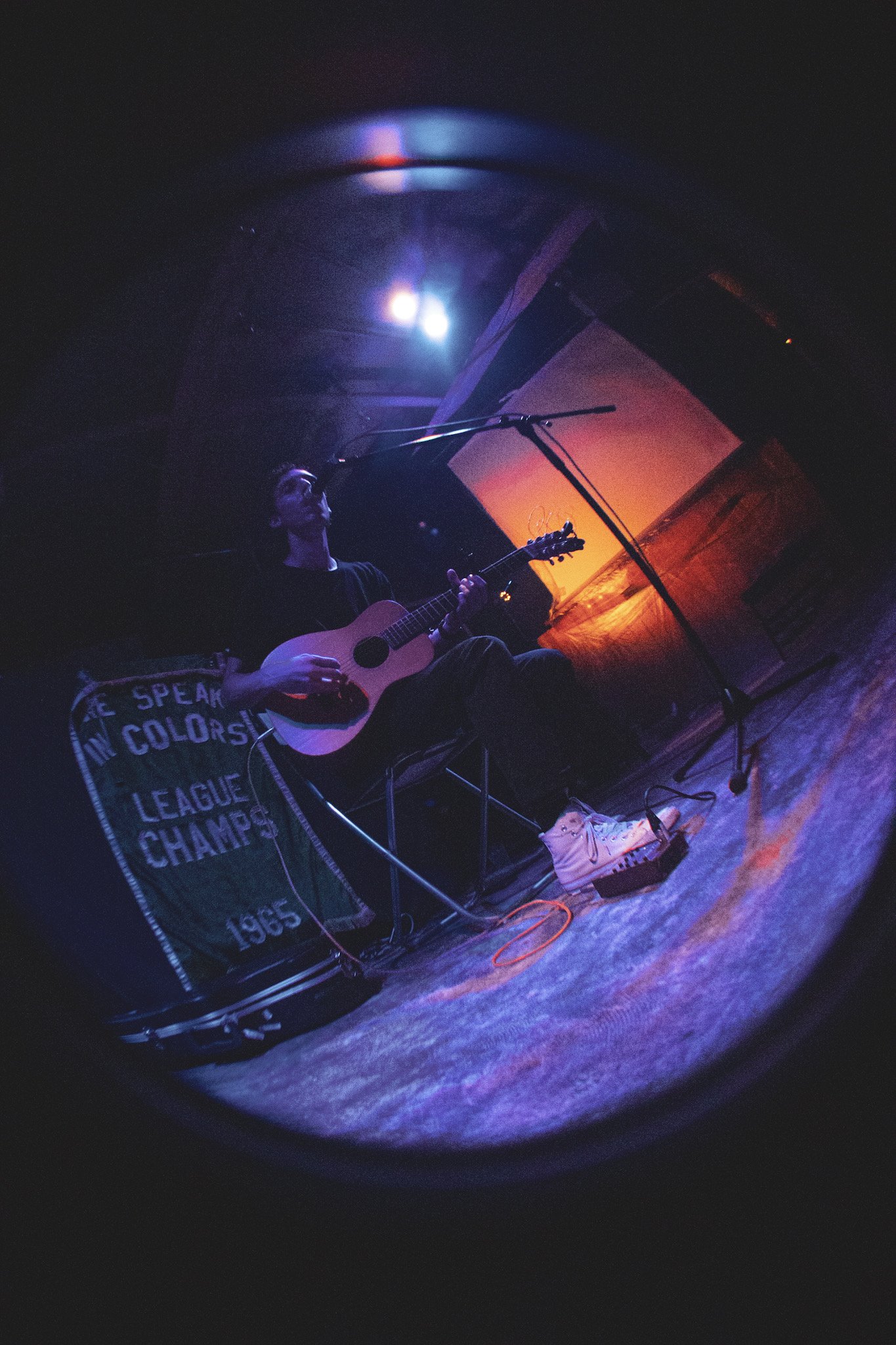
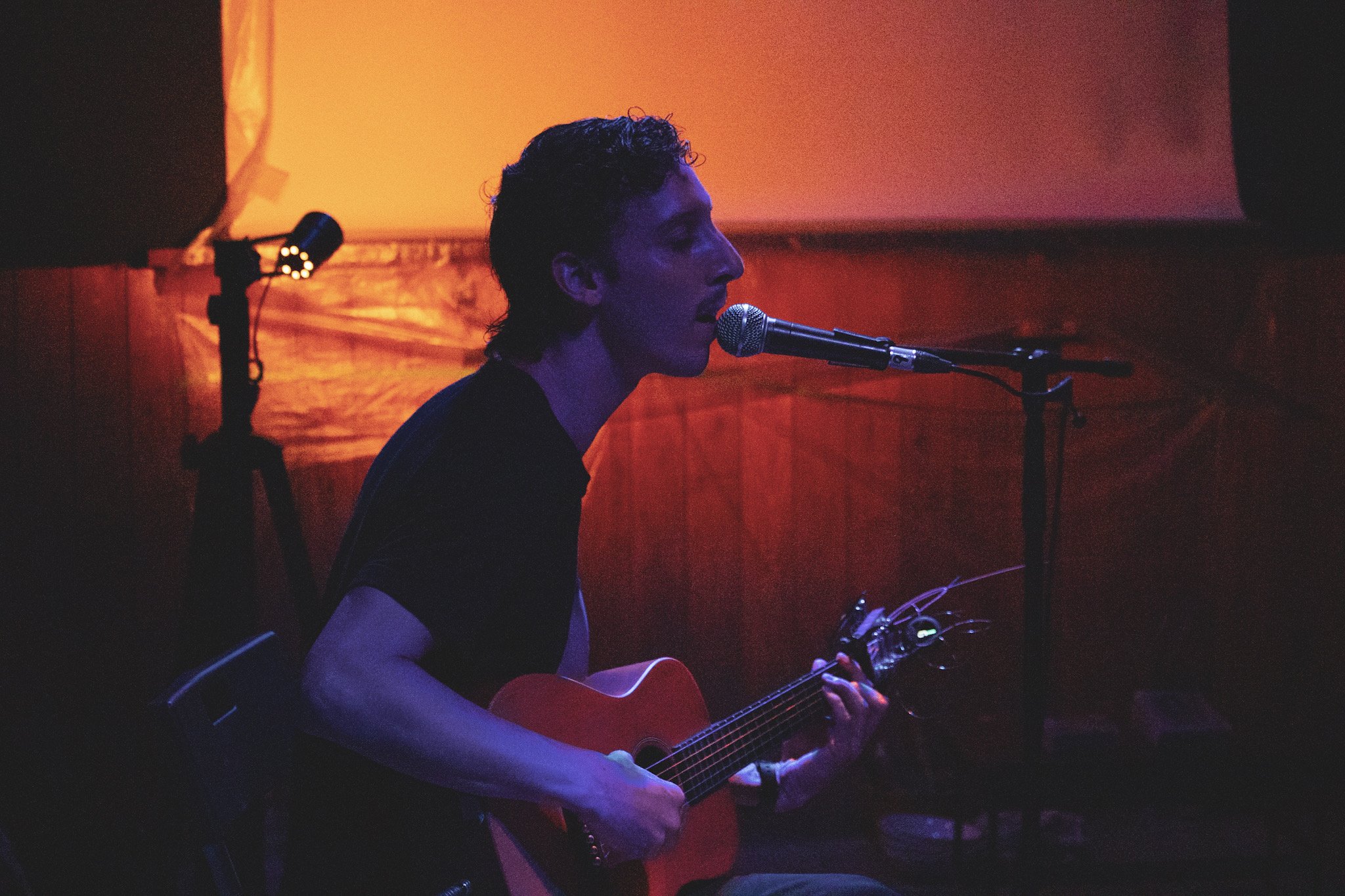
72 HOURS IN OSAKA

Your ultimate guide to 3 days in the East Asia cultural treasure

Words and Photos by Andy Armstrong

June 2024

You’re traveling Japan and only have 3 days to work with in Osaka.

No problem- plenty of time to tap into the energy of one of the world’s greatest cities.

And lucky for you, I designed the perfect 72-hour itinerary.

What this guide isn’t:

-A list of famous ramen shops and tourist attractions.

I like a big bowl of noodles and popular landmarks as much as the next person, but those spots can be easily found with some quick research.

What this guide is: 

-A carefully crafted blueprint of an authentic Osaka experience.

From scenic riversides to underground worlds to mystical shrines, you’ll feel the spirit of the city through a spectrum of environments.

So here it is, your ultimate guide to spending 72 hours in the East Asia treasure.


DAY 1

AFTERNOON

You made it. Feet on Osaka ground. 

Before diving into the magic of the city, reboot with a shower, some body movement, and a quick rest. 

Crucial to any successful travel experience, you’ll notice that recovery will be a common theme in this guide.

Without intentionally getting these moments to restore your energy, you can easily slip into a spiral of excess and poor decisions. 

Conversely, beginning your trip with some balance and sound judgment will begin a snowball in the right direction.

With the travel haze shaken off, embark on a little late-afternoon/early-evening adventure down to Osakako, the city’s laid-back port neighborhood.

Water is a primary element of Osaka’s DNA, so begin your journey seaside.

Utilize the city’s metro system by hopping the Chuo Line down to Osakako Station, and take advantage of the great waterside trails and parks, beautiful views, and towering ferris wheel

EVENING

Now that you’ve had a post-travel reset and gotten acquainted with the city, it’s time to visit the local sento and invigorate your spirit. 

Central, local feeling, and traveler-friendly, Tateba is a great public bath and sauna option. If you want something a little more upscale and extensive, check out Solaniwa Onsen right next to Bentencho Station. 

Not only will this hour at the sento change the direction of your trip, but you’ll also experience an incredible cultural ritual.

End the evening off with a magical nighttime visit to a symbol of the city, Osaka Castle.

This popular attraction gets overwhelmingly packed during the day, but at night, you’ll skillfully miss the crazy crowds and get treated to stunning cityscape views in peace. 

What a great first chunk of time in Osaka. You got some rest and fitness in. Then killed 2 birds with 1 stone at the sento by experiencing a cultural institution and reviving your body and mind. Topped off with skyline views under the night sky.

Head home for a good sleep.

Oyasumi (good night).

MORNING

Get out the door at a good time, and experience the city when everything is still quiet. 

Up and into the world, just you, and that fresh morning light and air. 

A big win to start the day.

For the first morning’s excursion, head down to Sumiyoshi, a classic part of the city featuring a beautiful park, magnificent shrine, and classic shotengai (outdoor/covered shopping strip).

This area is a little bit of a jaunt from the center of town, but easily accessible by train. Although Osaka is a massive sprawling metropolis, you’ll find it’s extremely well-connected and easy to get around by train, bike, and on foot. 

After meandering through the park and exploring the shrine, grab a coffee or bite to eat in the shotengai. Enter the shopping street here and head north til something catches your attention.


DAY 2

AFTERNOON

After a full morning, head back to your place to recharge for the next leg of the day. 

I like to use these pockets to rest, shower, and eat, as well as catch up on messages, and do any research / planning for the day.

This in-between time is crucial. Without it, burnout is inevitable. 

Next, make your way to the iconic Semba Center Building for an afternoon adventure in its underground maze.

This submerged realm is a labyrinth of seemingly endless hallways packed full of cafes, bars, restaurants, and an array of specialty shops.

The building stretches over a handful of blocks, with each block starting a new numbered section. A good option is to enter at section 6 and head down to B2 (two levels below ground).

These underground worlds can be confusing, but it’s well worth the effort.

EVENING

With an eventful evening ahead, this is a good spot to get a little sleep in, or at least some time for your body and mind to recover and process.

Rest time is over. 

You’re hittin the town. 

Venture east to Tsuruhashi for a taste of nightlife in Osaka’s Korea Town, a true gem of the city.

The area can be accessed quite easily by bike or train, though I suggest hopping on the JR Loop Line. This is one of the main elevated lines in the city, so you’ll be treated to stunning cityscape views out the train window on your way. 

Immediately after exiting Tsuruhashi Station, spend some time wandering through the surrounding maze of stalls, shops, restaurants, and bars nestled under the train tracks. 

Then, meander down Hondori Shotengai towards the area's main strip, Miyuki-dori. Use Miyukimori Shrine as your north star, as it sits right at the start of this main avenue of K-Pop-centric cafes, shops, and food stalls.

After exploring a bit, grab a bite to eat at one of the countless Korean BBQ or fried chicken spots. But don’t overdo it. The night’s still young and you don’t wanna be too weighed down. 

Head to the Daikokucho neighborhood for some late-evening music at Edenico, one of Osaka’s alternative music hubs.

The all-in-one cafe, bar, and music space stands out as one of the city’s most special spots. The cozy, dimly-lit lounge is a portal into a mythical experience fueled by a killer sound system, hand-roasted coffee, and the city’s best DJ’s.

The shop is generally open Tuesday-Saturday from 6 PM to late. If there’s a Sunday event, they close on Monday and Tuesday, and open back up on Wednesday. 

Their Instagram is a good place to get info on everything they have going on. 

Here are a few other great options for a late-evening coffee experience:

1. Teranoma: a well-curated electronic music bar in the iconic Misono building

2. Exodus: a hippie-spirited, music-centric Thai restaurant/bar/cafe sitting right on the edge of Amemura. Always have a good playlist going.  

3. Jantzen: a classy, retro coffee and tea lounge with a wonderful atmosphere

If you’re looking to continue into the late night hours (10 PM to sunrise), there are plenty of excellent electronic music space options. These include: Muffin, Daphnia, Cauliflower, Noon, Area, Upside Down, and Rake Raka. This is by no means an exhaustive list, just good places to start.

For more band-centric shows, hit the underground mecca, Namba Bears. Or check out indie sanctuary Socore Factory for events across a whole spectrum of genres. 

To grab some fliers promoting the city’s latest events, stop into renowned record shops Newtone and Rootdown

MORNING

After letting your hair down a little the night before, get your blood moving the next day with a scenic stroll (or bike ride) along the Tosahori / Okawa River. 

Starting around Higobashi Station, make your way along the river through Nakanoshima, Kitahama, Temmabashi, and eventually Sakuranomiya. 

This quintessential riverside park and trail system boasts stunning views, great architecture, and unique dining options. 

For a quick coffee and snack break, pop into Nakaoka, a timeless retro cafe with good coffee and classic Japanese cafe food. 

Then, continue up the river to Temmabashi, where you can conclude your venture or, depending on your energy levels,  keep curling along until you hit Sakuranomiya.

Either way, a superb morning adventure. 

Afterwards, go back to the accommodation for a refresh.

DAY 3

AFTERNOON

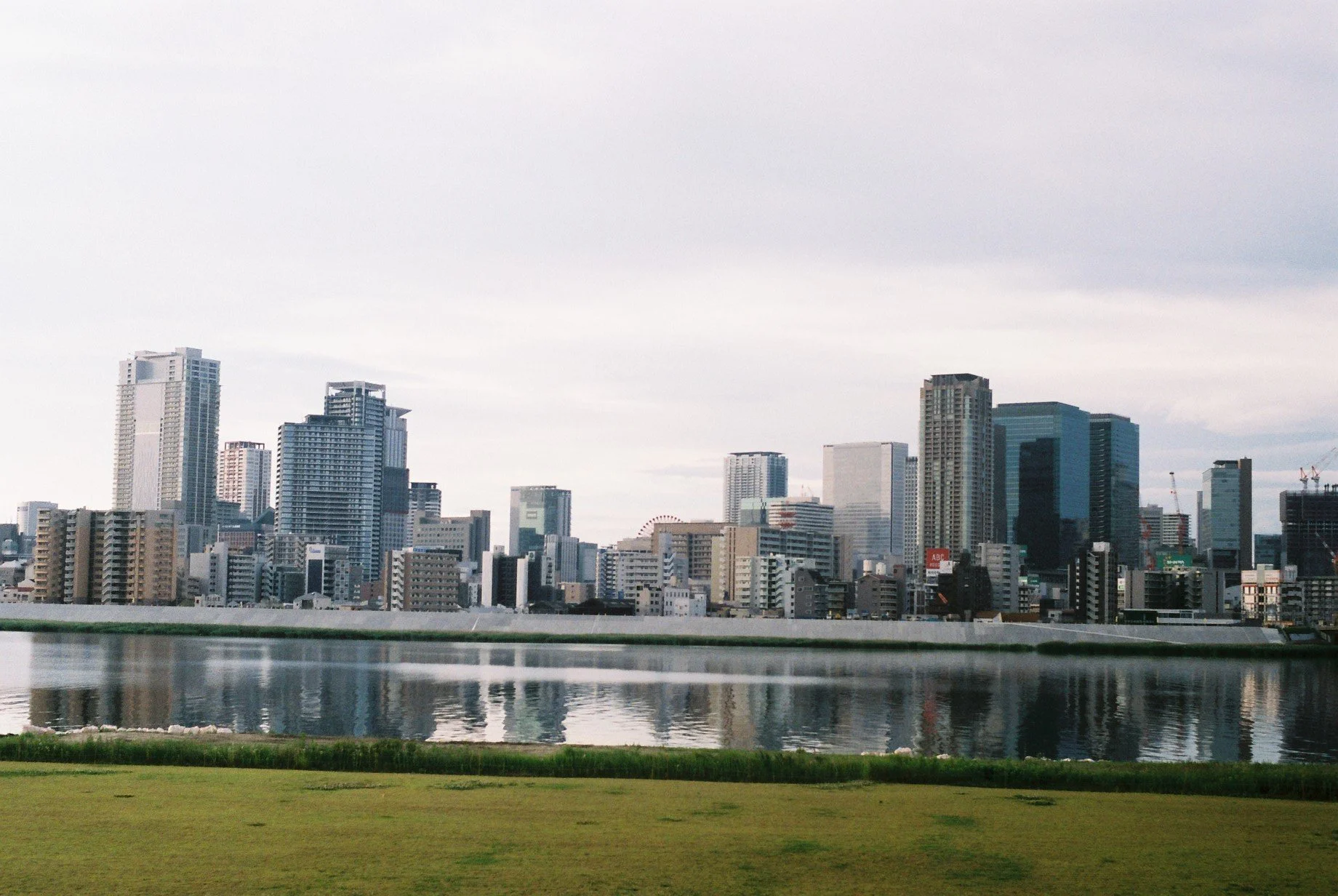
After a morning on the move, hit the Juso riverside for a more relaxed afternoon at Yodogawa Riverside Park.

Featuring vast, sweeping views of the city-splicing river and downtown city skyline, this classic riverside park is not to be missed. 

You’ll quickly see why it’s a trademark of Osaka’s creative world- often appearing in films, music videos, and fashion photography. 

Once you wrap up your afternoon on the riverside, get in another visit to the sento if there’s time.  

Things are gonna pick up later with a pretty extensive urban hike, so make sure to get some rest.

EVENING

Then, kick off the evening at the Dotonbori River, a staple of the city. After snapping some photos, make your way through the Aiaihashisuji Shotengai (straight down from this bridge).

And at the end of the shotengai, cross straight over the main street.

You’ve just entered Nipponbashi, one of the city’s many great slices.

Cut through the electric neighborhood, following your instincts in and out of alleys and side streets, but ultimately heading south.

3 recommendations in the area: 

A. Togetsuya- a great vintage ephemera shop packed full of magazines, books, maps, manuals, and all sorts of retro relics. A great spot for unique and meaningful gifts.

B. Merry Nice- a killer J-Pop-centric music and accessories shop. Another good place to grab a gift or personal keepsake.  

C. Pollux Theatre- a music venue hosting exclusively kawaii-anime-pop acts. If you’re lucky enough to catch the hub of the underground idol world on a night with a performance, it’s worth paying the door charge, even for just 30-45 minutes.

After tackling Nipponbashi, continue south to the Shinsekai neighborhood, which hosts the iconic Tsutenkaku Tower, a structure built in the 1950’s symbolizing the city’s period of rebirth.

Circle the area, dive down its alleys, and pass through its shotengais. Then, head south once more for the final leg of the evening.

Crossing over the main road at the bottom edge of Shinsekai, you’ll enter into the Taishi area of the Nishinari district. 

As you move through the strip of boisterous karaoke bars and cheap food stalls, you’ll feel an exciting shift in energy.

From the Dotonbori River down through Nipponbashi, into Shinsekai, and deeper into Nishinari. 

Electric and neon. 

What a night. 

MORNING

Ohayo gozaimas (good morning). 

Your time in Osaka is coming to a close, so let’s keep this last bit low-key. 

Take a leisurely stroll through Karahori Shotengai in the Tanimachi 6 neighborhood. 

This vintage and thriving outdoor shopping strip hosts a plethora of high-quality shops where you can get:

-a nice plate of curry 

-handmade cup of coffee

-traditional, delicious sweets

-a great bowl of noodles

And just like that, your 72 hours in Osaka is over.

Time to pack up and get moving to the airport or train station. 

But no need to fret, because you just had a killer 3 days in one of the best cities in the world. 


Do you live in Osaka and have someone visiting? 

Or keep getting requests for recommendations in the city?

Use this itinerary and be a hero.

Thanks for reading,

-Andy 

P.S. Here’s a bonus recommendation for a great day trip out of the city:

Lake Biwa.

A true treasure of the region. 

A vast, magical body of water, offering stunning views, diverse beaches, parks, shrines, and a plethora of excursion options, from ferry rides to cable cars to hikes.

Plus it’s easy to get to- just an hour and 15 minutes from Osaka’s hub stations in Umeda or Kyobashi.

Suggestions:

-Make your way to Cable Sakamoto Station and ride the Hiezan-Sakamoto Cable Car up to Cable Enryakuji Station for a beautiful view. Continue with some hiking, or head back down to the lakeside. 

-Move further up the lake on the elevated train line to Makino Station. Rent a bike or walk out to the Kaizu Osaki lookout point at the tip of the peninsula. 

Lake Biwa won’t disappoint.

Andrew Armstrong
LYRICS AND PROCESS TRACK BREAKDOWN: "MY MINDSET"

usING the muse and digital systems to craft a song

Words by Andy Armstrong

Video by Boris Holmes

Photos by Kensei Kataoka

With early spring performances in Osaka and Tokyo in the books, and two shows in Seoul on the horizon, I was locked in. 

Transfixed. 

But knowing that these bursts of tunnel-vision focus move in cycles, I followed my instincts to document the season. 

In the height of spring last May, Boris Holmes, Kensei Kataoka, and I set up shop on the rooftop of the Edenico building, a hub of Osaka’s alternative-electronic web.

And over the course of an afternoon, shot 4 live performance videos, including the unreleased track, “My Mindset”.

Which during this chunk of shows, had been the sets’ opening song.

It was new and exciting. 

A combination I look for when choosing how to dive into a show.   

It’s like a cheat code to forcing yourself into the moment, and into your body.

On a good night, the audience will subconsciously sense your boldness and presence, and feed you energy back in return.

It’s terrifying and thrilling.

Terrifying because, with a newer song especially, the train can come off the tracks at a moment’s notice. 

Thrilling because there’s potential for this risk to pay off, and send a jolt of electricity through the room. 

THE ORIGIN, THE MUSE

“My Mindset” started like most tend to: 

A specific element or or overall spirit of something I’m listening to will spur me to pick up an instrument. 

Kickstarting me into some rhythmic or tonal jumping off point.
This can lead to landing on a resonant chord progression and melody. 

Then, with some direction, I begin carving out more detailed sounds and cadences tied to the melody. 

Throughout this process of playing with notes, I’ll sing whatever comes out naturally. Generally a garbled mix of incoherent gibberish, and random, audible words or phrases.

Often one of these words or phrases will recur, and catch your attention in some way. 

A little gift from the muse, as Steven Pressfield refers to it in the classic War of Art.

In the case of “My Mindset”,  the muse goddesses gave me the phrase, “Baby, I’m back”.

It’s less of a romantic decree, and more of a pep-talk to yourself.

A personal proclamation, as you bounce back from a knockdown. 

A declaration of your return, now stronger than ever. 

This line- “Baby, I’m back”- combined with the melody and tone of the song, felt worth following.

INTO THE ARCHIVE

At this point, when a foundation’s in place, I head to my archive. 

My digital den where all things lyrics are stored.

When a word or phrase grabs my attention, I simply document it in this electronic filing system. 

That way, in moments like this when it’s time to craft lines of lyrics, I have a whole river of ideas and inspiration to go to.

These words or phrases can be found anywhere- in a conversation, movie, book, interview, advertisement, email, magazine. Or they can just appear in your mind, an offering from the subconscious as it connects dots in the background.

I began plucking things out of this database that jumped out in the moment, and felt connected to the phrase, “Baby, I’m Back.”

Here’s some of what I grabbed: 

Shaman

Cincinnatti
New Jersey 

Riverside

Sunbeam

Grape soda

Telenovela

Shimmering 

Year of the rabbit 

MOLDING AND SHAPING

Once I had this bank to work from, it swiftly led to building out individual lines. 

Starting with:

Baby, I'm back / It's my mindset

I escaped from that island 


And from here it was just piecing together the rest, creating an environment for the song to live in.  

This is the best part of the songwriting process for me.

The phase where you get to snap into obsessive tunnel-vision. The brief period marked by a state of hyperfocus, when all your senses over the course of a few days are committed to the task.

In this case, writing lyrics. 

Constructing a world; a fantastical collage that weaves in and out of fiction.

This is certainly not a unique process, but an effective one. Many of my peers and favorite writers use some customized version of this approach. 

Watch and listen to the result below. 

Embed Block
Add an embed URL or code. Learn more

Full lyrics:

Baby, I'm back / It's my mindset

I escaped from that island 

Why are you still in hiding? / Hold on, do you even like him?

I sent a text to my shaman

From the plane / she never saw it

Do you think you can go stepping onto that same riverside again?

Passing through Cincinnati / an electric, viral sunbeam 

Almost made it back to Jersey

Please pull off / I need to come some sleep

I just want a sip of your grape soda / telenovela  

It's the year of the rabbit and it's trippin me out 

Into the future

Isolate in shimmering sound / I don't know why you bother

Baby, I'm back / It's my mindset

I escaped from that island 

Why are you still in hiding? / Hold on, do you even like him?

“I sent a text to my shaman

From the plane / she never saw it

Do you think you can go stepping onto that same riverside again?”

Andrew Armstrong
HOW TO RIP OUT OF A RUT

3 Practical STRATEGIES TO elevate your creatIVE energy

Words and Photos by Andy Armstrong 

May 2024


My brain has mastered jumping through hoops, doing anything it can to convince itself that I’ll get to it tomorrow.

That there’s time. 

A slippery slope leading to ideas being kicked down the road for months, and in many cases, years.

But over the 15 years of creating, I’ve uncovered some tactics to get things rolling. Because sometimes a little momentum is all we need.

So, if you’re in a rut, feeling like you’ve hit a wall and unsure of how to get moving, you’re in the right place. 

These 3 strategies will unlock your creative energy, and propel your work into unexpected territory.

1. BOOK AN ADVENTURE

I like to think of these adventures as creative business trips. 

Sure, they can be fun. But there’s intention behind them, objectives to hit.

These aren’t passive escapades, but instead purposeful missions to uncover solutions and ideas.

We‘re looking for breakthroughs.

These quests can be as simple as:

  • a jaunt across town to the library

  • visiting a park you’ve been meaning to get to

  • hopping a train to an unknown station

  • cruising a couple of towns over and turning down some unfamiliar roads

  • finding a view of your town from a new perspective 

  • hitting a hiking trail early in the morning

The specifics are irrelevant. What matters is your perspective.
On this adventure (your creative business trip) you’re going to be on the hunt for opportunity and inspiration. You’re expecting them to show up. You’re expecting the breakthroughs.

Reality is a mirror, after all.

As Pam Grout says in her sacred book, E-Squared, “We see what we’re looking for.”

So, what are you looking for? Maybe it’s a:

  • story

  • a photograph

  • a serendipitous meeting 

Or maybe it’s just a nudge in the right direction, some clarity, or a new perspective. 

If you’re open and seeking, ideas and inspiration will arrive. 

An adventure can be the spark, the setting for these things to show up.

As spring kicked in recently, I knew it was time to create.

This conviction always arrives as one season fades and another starts. 

Unsure of what to dig my hands into, I had a feeling an adventure would tell me.

And since I was craving some country air, I sprung out of bed early on a Saturday morning, and hopped on the first train out to an iconic mountainside temple.

The goal was simple: to be open and present. To feel, think, observe, appreciate. 
Of course, I was armed with my camera and a bunch of film- an artist must always be prepared with their tools.

As the journey played out, inspiration struck. And before I knew it, I’d ripped through all the rolls I had. 

These photos later revealed themselves as a really cool 3-Part photo-series that I published on my blog, which could easily be repurposed into an exhibition and zine. 

All from a simple adventure to the countryside.

That’s just one example. 

There are endless possibilities of how an adventure can propel you. 

Give it a shot. Schedule in a creative business trip, and see what shows up. You may be surprised.

On to strategy number 2.

2. PURSUE A PROJECT

Books are great. Powerful, even. So are videos, courses, and workshops.

I’ve accumulated a ton of invaluable knowledge from these kinds of resources.

But the real lessons, the true transformative learning and growth, only came when there was something to attach it to.

A project.

You see, the information and insights needed something to stick to. 

When you are building something, skills get ingrained in your bones. 

Projects back us into corners. They force us to face problems and figure them out. 

Til I sat in that driver’s seat at 16 years old, buckled up, and ripped that big, beautiful, forest green Tahoe into gear, I had no clue how to navigate the roads of my small town. Sure I’d watched my parents do it for years and read the coursebook my school provided.

But I needed something to attach this studying to. 

It’s the same with creative endeavors. 

We’ll devour hours of YouTube videos and pour through countless articles. Researching til we’re blue in the face.

But this is usually the point where things come to a halt. We get stuck in the exploration phase and never actually start.

How can you blame us though? Starting is terrifying. And guaranteed to be painful. 

I mean what kind of masochist actually enjoys staring failure straight in the face, risking the embarrassment and disappointment that comes from defeat. 

But there’s no better feeling than working through discomfort and getting to the breakthrough.

So, give yourself a project, a prompt.

Whatever your field of curiosity, the options are endless. 

Mine generally revolve around music and photography, so that’s where I’ll offer some insight.

Projects that have taken my work and confidence to new levels:

  • Events- booking/organizing/promoting things like photo exhibitions, music gigs, and pop-ups

  • Publishing- writing/executing/producing things like a song, music video, or photo-series

The complexity and scale don’t matter. It’s just about taking the first steps down the path.

Because once you begin building out a project, vision develops. 

And when you have vision, you can actually start breaking things down into little goals. 

Little actions.

And then something miraculous will happen. 

Opportunities will just start showing up.  

Your subconscious will be working for you. It will start connecting everything to this project.  

You’ll sink into a beautiful period of tunnel vision. 

If you decide to do a little pop-up shop and start slinging postcards, your brain will begin connecting everything to that. 

The world will lay ideas at your feet, giving you inspiration for your:

  • table set up

  • sign design

  • layouts of the postcard

  • marketing strategies

  • collaboration opportunities

  • printing

And on, and on. 

And throughout this process of building out your postcard pop-up project, you’ll develop numerous aspects of your craft, including:

  • shooting techniques

  • design skills

  • marketing abilities

  • knowledge of paper and printing

  • software competency

That’s a lot of bang for your buck. 

So, initiate a project. 

It will be scary, overwhelming, and intimidating. But, wow, will it be worth it.

Ok, moving on to the final third and final strategy...

3. COLLABORATE WITH A HUMAN

Photo of Billie Jean, a jazz artist, on Lake Biwa, Japan

I like my alone time. And a lot of it. 

It’s when my brain gets the space and bandwidth to consider, connect dots, and rest. 

Furthermore, it’s these solo periods where I can sink into deep work, spending 2-3 hours totally dialed in on one task. 

Combine that with consistency, and an output superpower is uncovered. 

With all this praise for solitude, it may feel like a contradiction when I say to put yourself in a room with a person. 

But if you want to elevate and evolve, hear me out. 

Existing in isolation is a path to nowhere. 

While alone time has been a powerful tool for me, it can also be a killer. 

You can get stuck in dark cycles, those treacherous rabbit holes of despair, drowning yourself in cheap dopamine just to avoid yourself. 

I’ve had to learn this over and over. And will continue to learn it over and over. 
All of my biggest leaps have come from long periods of working alone, but only when combined with hits of collaboration. 

Working with someone forces you to step into the role of the person you’re trying to become.

You quickly see where you’re at, a fast track to exposing the holes. 

It’s like sparring. 

(Yes, a Mixed Martial Arts analogy) 

You gotta test yourself.

How sharp are your instincts and reactions? How are you seeing things? 

Collaboration gets you on the mat and answers the questions.

These experiences are pivotal to growth in your craft.

Photo of Billie Jean, a jazz artist, on Lake Biwa, Japan

This is why photo shoot collaborations have been so fruitful for me. 

At first, I was terrified to shoot portraits.

But something in me knew I had to follow this fear. 

As Steven Pressfield expresses in the seminal book, War of Art

"Are you paralyzed with fear? That’s a good sign. Fear is good. Like self-doubt, fear is an indicator. Fear tells us what we have to do. Remember our rule of thumb: The more scared we are of a work or calling, the more sure we can be that we have to do it."

So, I just started shooting. 

Artists, models, fashion brands. Anyone I connected with.

I was backed into a corner and forced to figure it out. 

Through these uncomfortable, and at times, embarrassing situations, I learned how to navigate: 

  • Unpredictable weather

  • Equipment malfunctions

  • Strange vibes

  • Location limitations

  • Wardrobe issues

  • And every other problem under the sun

Reps upon reps of pressure situations sharpened my instincts.

So, pursue your curiosities, and find a human to work with. 

It will be painful and weird, but you’ll grow more than you can imagine.

………………………………………

  • Book an Adventure

  • Pursue a Project

  • Collaborate with a Human

3 impactful methods to activate the loop of action into inspiration and back into more action. 

It will be uncomfortable and a little scary. But the pain of regret is much scarier.  


-Andy Armstrong / We Speak in Colors


Andrew Armstrong
CWONDO: IN OSAKA WITH THE FRENETIC GLUM-POP GURU

Words and Photos by Andy Armstrong

May 2024

Inward and private, Cwondo feels withdrawn into his own little universe.

Yet, his hyperpop world is strangely magnetic, pulling you into its swirl of playfully glum masterpieces.

Last spring at Osaka’s indie sanctuary, Socore Factory, the Tokyo-based songwriter/producer/track maker treated the audience to a beautifully frenetic and emotionally dynamic set.

A startling but endearing shock to the system.

Cwondo’s a hustler.

Any night of the week you can find him crawling around the city, laying down his offerings to the electronic gods.

But this weekend, he left the capital behind and set out on a mini-tour, first stopping in Nagoya, and then Osaka, one of East Asia’s music epicenters.

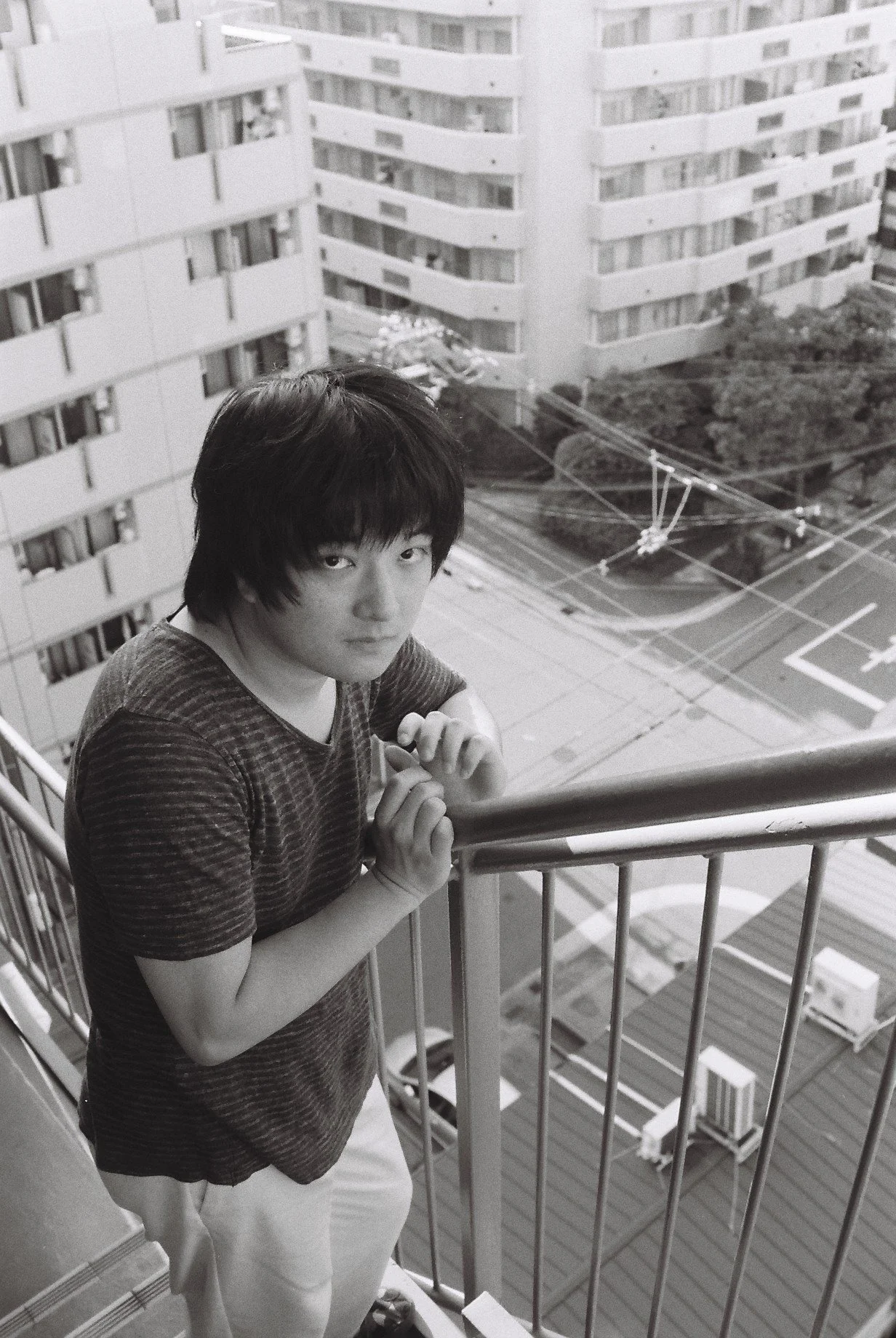
To document his visit, we met up after soundcheck and circled the neighborhood to capture a set of heartfelt black-and-white film portraits.

With limited time and little control over the location, shoots like this can be daunting.

But also extremely freeing.

You’re forced into working with what you have, relying on senses and intuition.

A cheat code into the flow state.

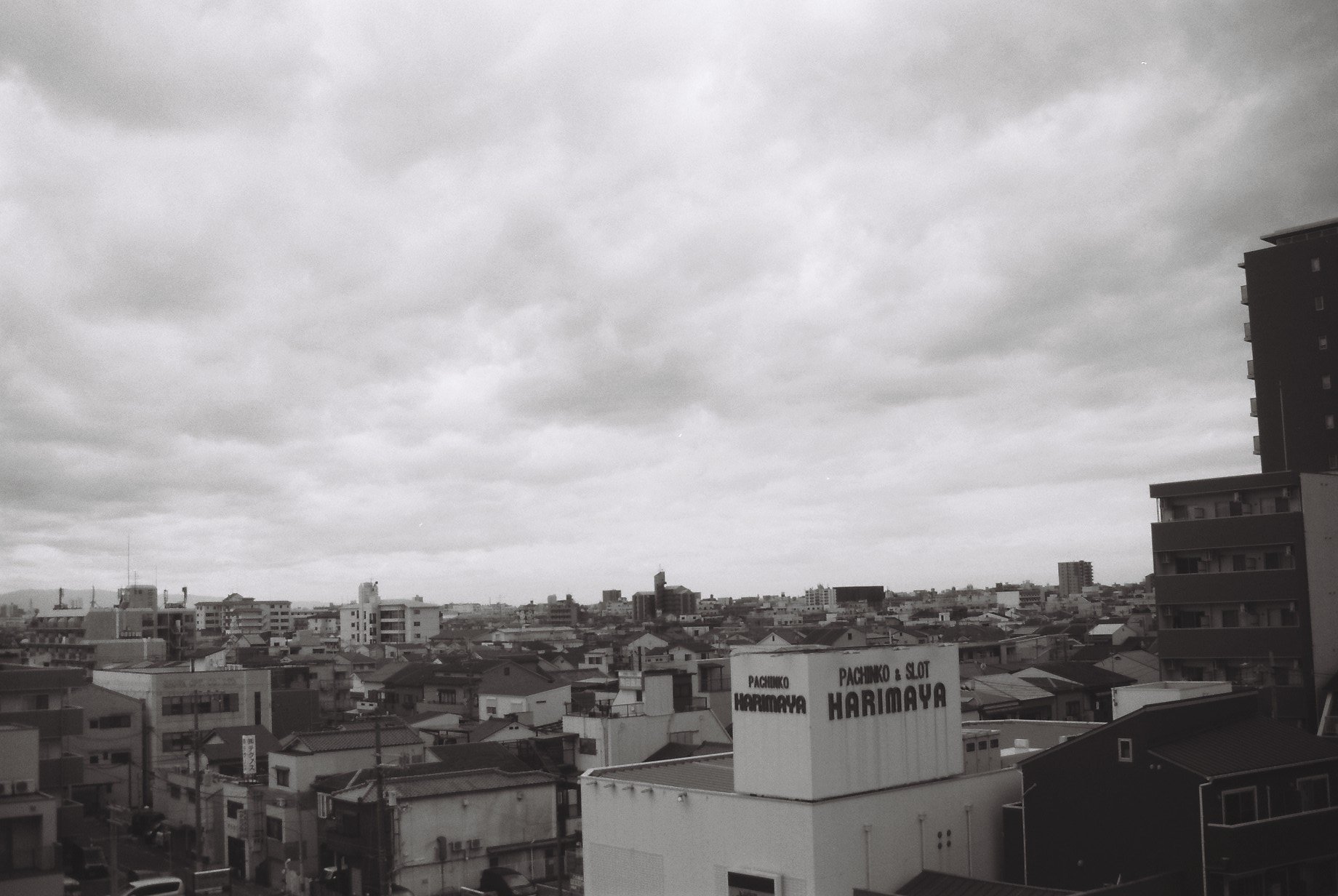
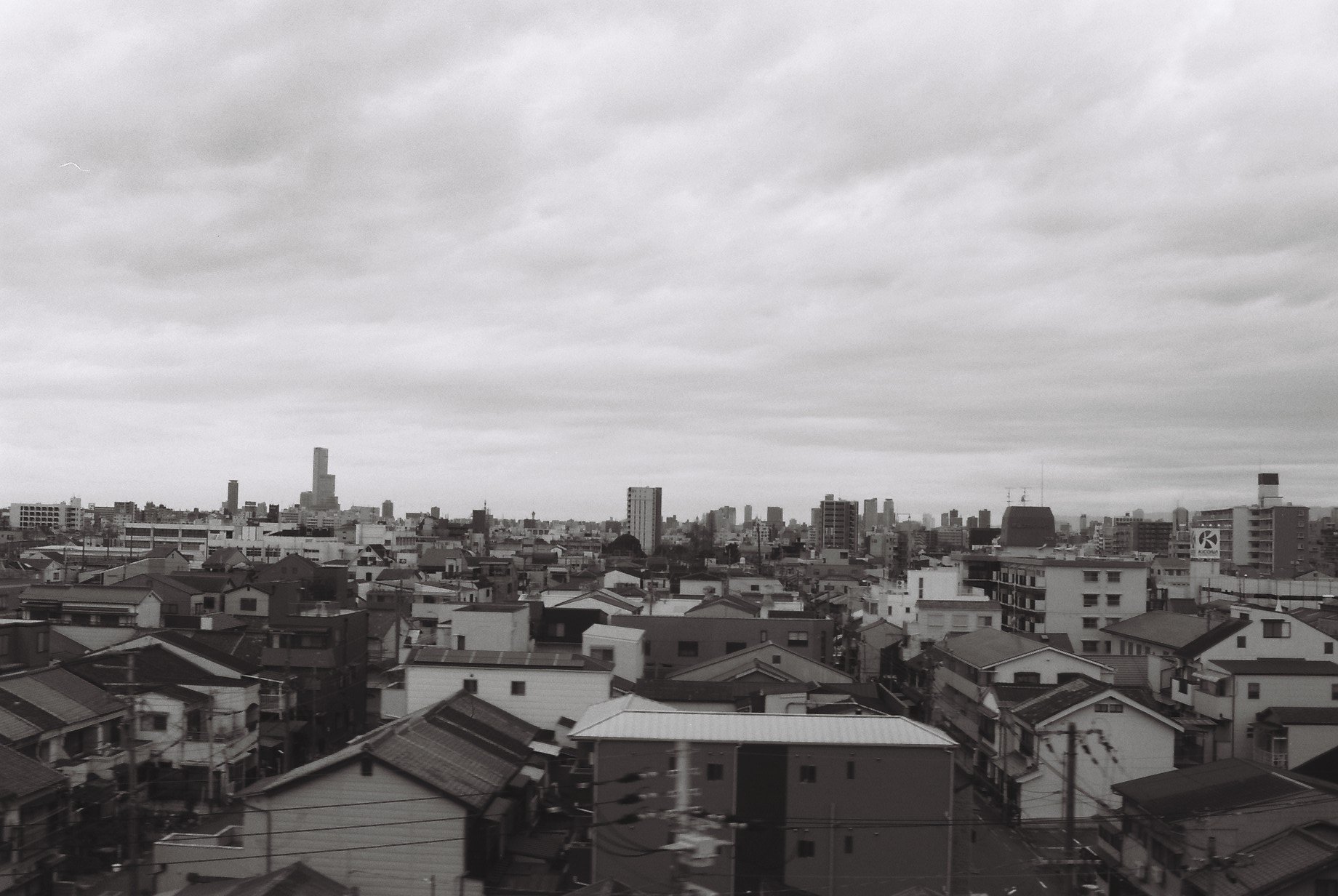
Following instinct, we found an open entrance and popped up to the top floor of a high-rise apartment building to borrow the view.

It turned out to be a goldmine.

After making the most of the city skyline, we meandered to Amidaike Koen, a classic Japanese park just a block from the venue.

During our venture, I discovered that Cwondo operates out of his humble home studio, where he handles all aspects of song production, including engineering, tracking, and programming, entirely on his own.

It’s astounding, considering the scope of sounds, elements, textures, and emotionality featured in his tracks.

Before long, we had a couple of rolls of film in the can and parted ways to get prepped for showtime.

Like some of my other favorite Japanese artists, specifically Pikomaruko and Sakusen 53, the stage is a catalyst for Cwondo. A temple gate spurring a transformation into extraordinary new versions of himself.

Cwondo’s live performances are dizzying. Shifting from frantic to subdued at a moment’s notice, completely in sync with the music’s energy.

With a superb catalog of releases that includes full-length albums, EP’s, singles, covers, demos, remixes, and live sessions, Cwondo recently added another one to the list:

Cwondo Memo 2020-2024.

A new album of 21 whimsical demo tracks ranging from gently-textured soundscapes to twitchy anthems.

A leftfield ballet, pirouetting through fantastical and wistful collages of synths, guitars, and drum machines.

At the forefront of Japan’s flourishing indie-electronic wave, Cwondo is a gift to the country’s music culture.

Prolific and committed, he transcends.

To dive into Cwondo’s work, here are a few good places to start:

1. “Twwen” from Hernia

2. “Sarasara” from Coloriyo

3. “Kurukuru” from Cwondo Memo 2020-2024

Get ready for a startling, but endearing shock to the system.

-Andy / We Speak in Colors

A MORNING IN HASEDERA, 3-PART PHOTO SERIES RECAP

A collection of highlights from the journey to the iconic temple grounds

Over the past couple weeks, I published a 3-Part photo-series called A Morning in Hasedera.

The images document my mini-pilgrimage to Hasedera Temple in Nara Prefecture, Japan earlier this spring.

To wrap up the series, I conveniently compiled the highlights of each part.

Recap below:

A couple train transfers and an hour and a half southeast of Osaka City, the iconic temple sits on a beautiful mountainside.

Although there’s a sturdy infrastructure of signs and shops catered to visitors making their way to the sacred grounds, you’ll miss the crowds if you set out early enough.

Left: After entering, you can choose between a slew of maze-like pathways. These trails twist and turn, winding you through numerous mountainside shrines and temples, including Hasedera Gojunoto.

Right: Along the journey, you’ll also come across a plethora of sanctified objects, like this statue standing tall in the sunbeams.

Mountain and village view from a tastefully-nestled wooden lookout. 

There’s no shortage of spots like this to catch a beautiful panorama. 

See Part 1 in full here.


Part 1 took us through the temple grounds. 

In Part 2, we’ll see some treasures of the surrounding town.

Left: An undisturbed, small-town road not far from the Hasedera Temple compound. 

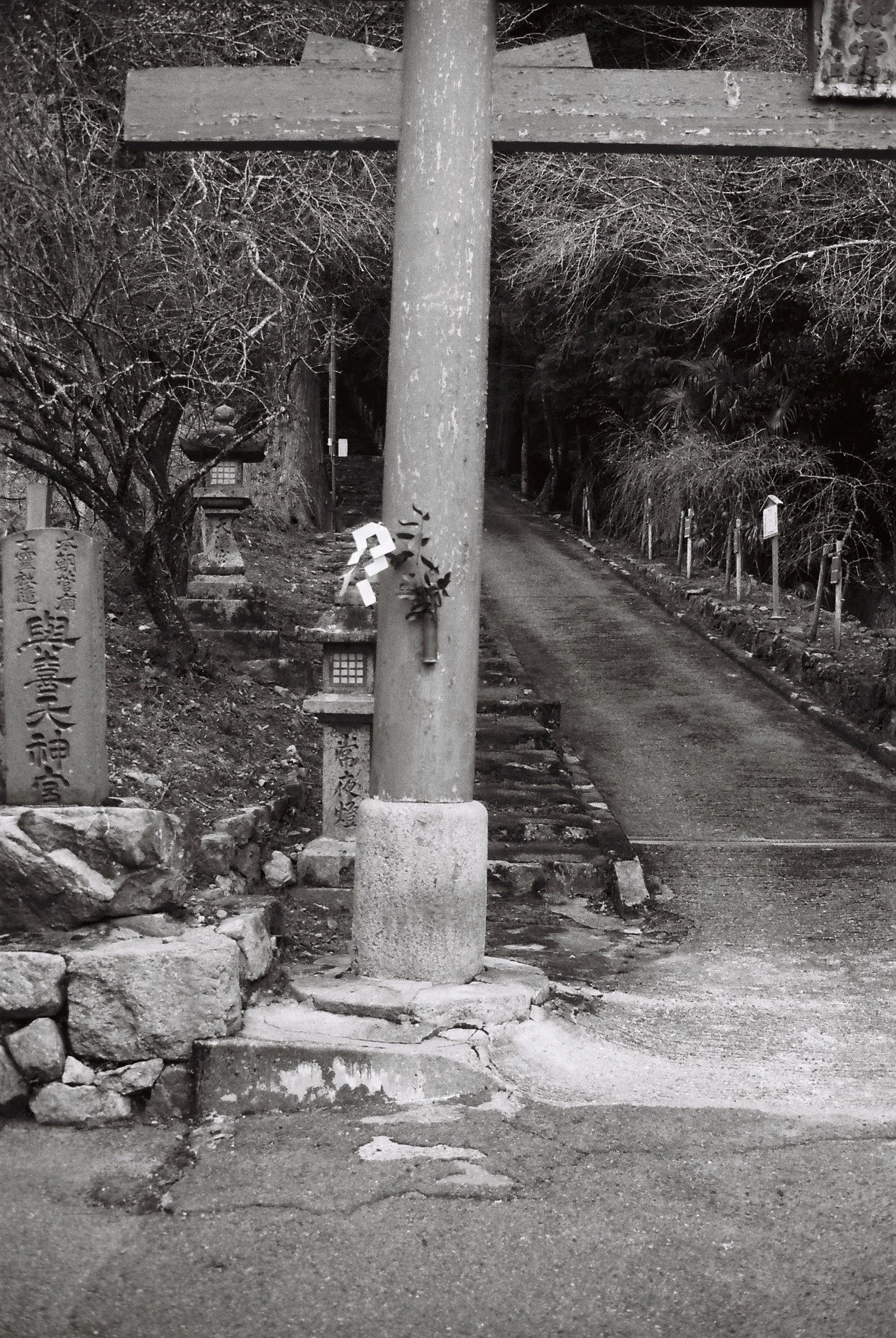
Right: A classic shrine gate (torii) adorned with a simple but beautiful decoration and flower arrangement. These gates symbolize the transition into a new realm, from the everyday into the fantastical. 

Left: Just outside the grounds, looking over a village tucked in the valley below.

Right: The Yamato River gently splashing between small-town homes. 

Full Part 2 blog here.


Parts 1 and 2 took us on a quest through the temple compound and surrounding town, but now it’s time to head back to Osaka City. 

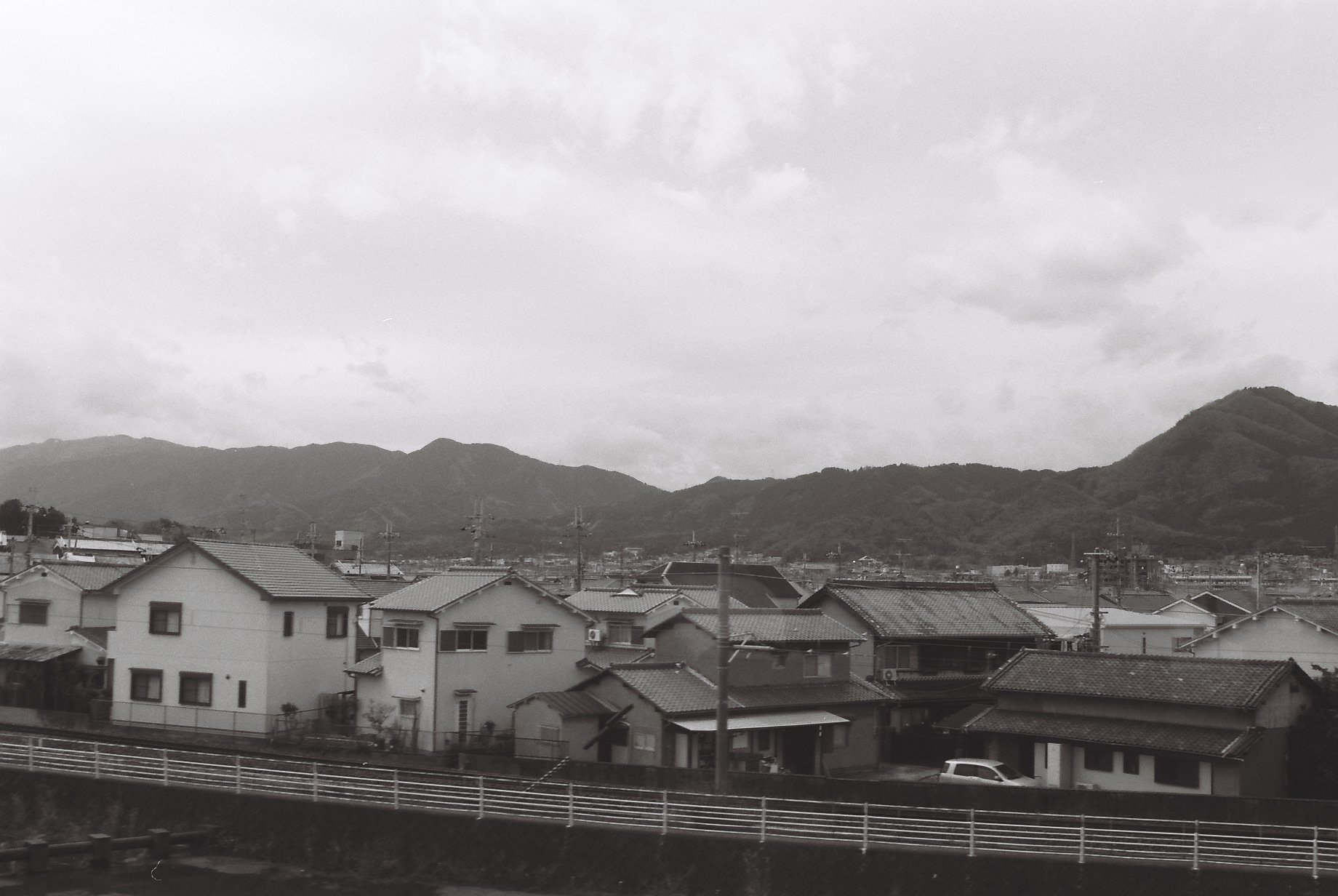
Through the train window, Part 3 reveals the landscape’s slow transformation from rural to metropolitan.

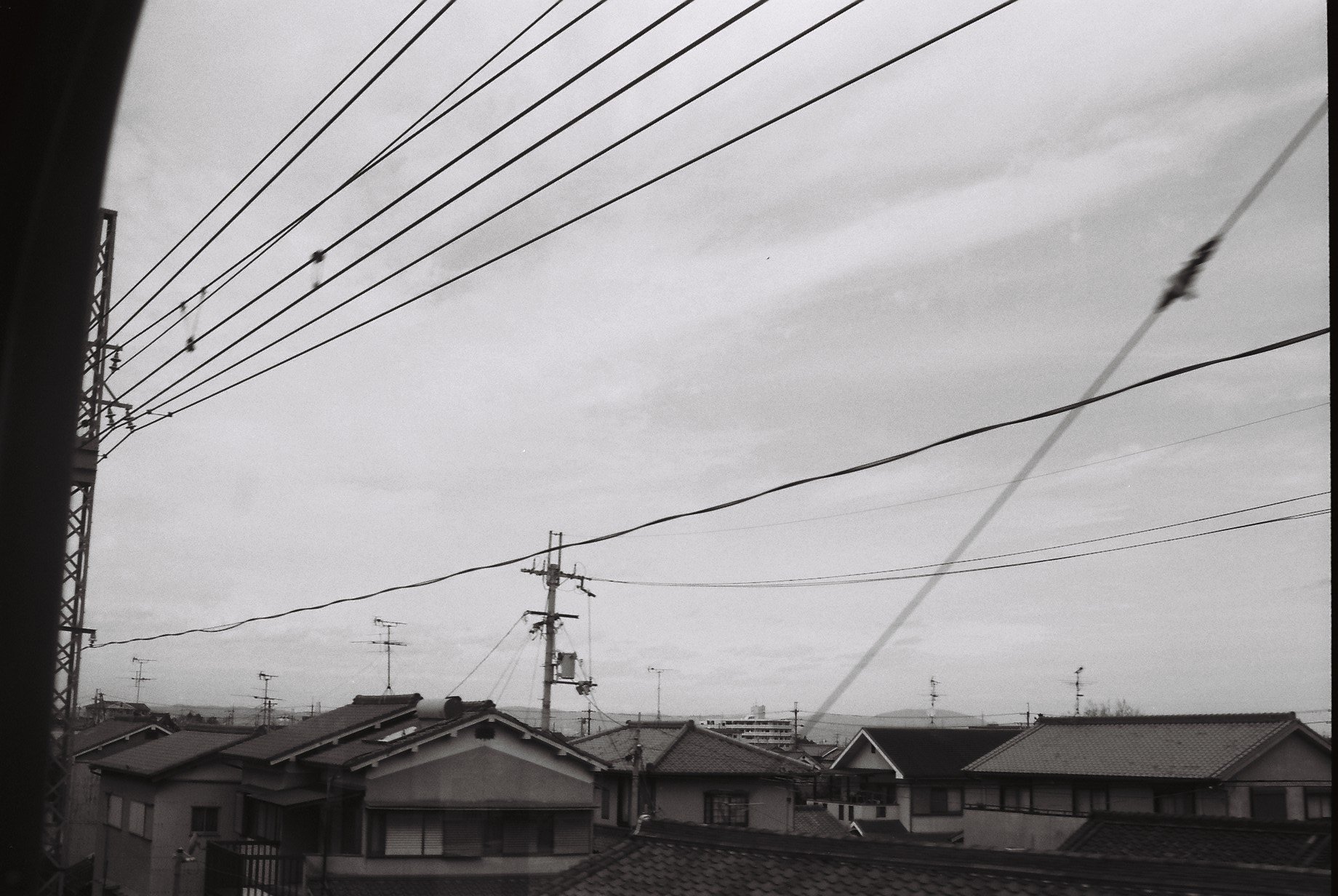
Left: On the first leg of the journey, cruising down the tracks through open fields and small towns.

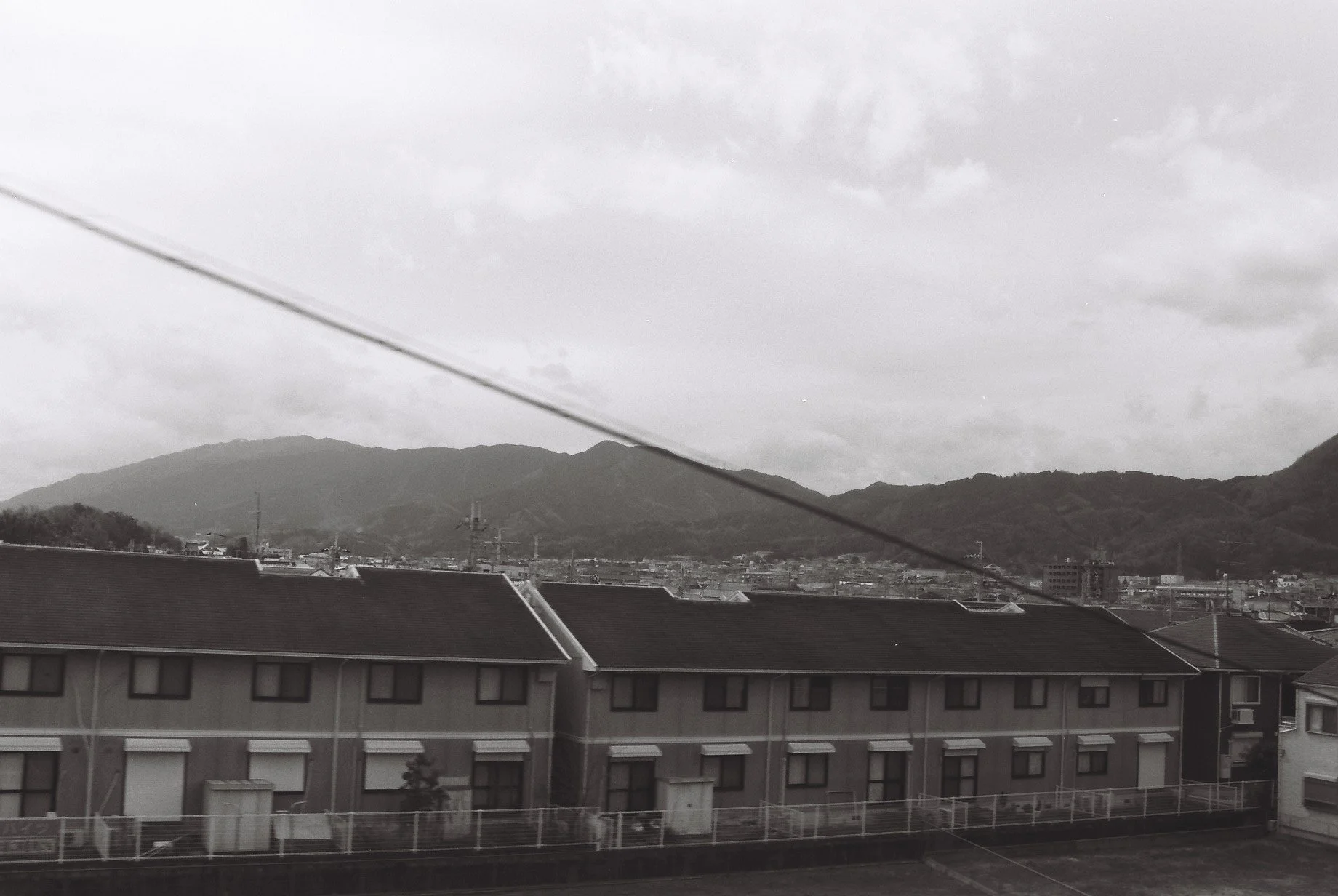
Right: Inching towards the city. Buildings growing taller, open space dwindling. 

Back in the city limits; countryside long forgotten in the sprawling rooftops and heightened energy.

See full Part 3 set here.


Through the temple grounds (Part 1), around the town (Part 2), and back on the train (Part 3). 

A journey to the countryside through the 3-part photo-series, A Morning in Hasedera.

Thanks for joining me on the adventure.

If you like the vibe of this series, there’s a nice set of ready-to-print digital photos in my online shop. A handy pit stop for a birthday or upcoming holiday- can’t go wrong with a unique, heartfelt photo.

Thanks a lot for reading,

-Andy / We Speak in Colors


P.S. I send out a monthly email with pieces just like this. Sign up below to join the crew getting a regular dose of art, culture, and inspiration sent to their inbox every month.

Andrew Armstrong
PART 3 OF A MORNING IN HASEDERA

An early Spring journey to one of Japan’s most sacred temples

Parts 1 and 2 of A Morning in Hasedera took us on a quest through the tranquil pathways of Hasedera Temple and the peaceful surrounding town.

We discovered some of the sweet treasures the Japanese countryside offers, but now, in Part 3, it’s time to hop on the train and head back to Osaka City.


On the first leg of the journey, cruising down the tracks through open fields and small towns.

Inching towards the city. Buildings growing taller, open space dwindling. 

Back in the city limits; countryside long forgotten in the sprawling rooftops and heightened energy.


Through the temple grounds, around the town, and back on the train. 

A journey to the countryside. 

A tranquil 3-part photo-series: A Morning in Hasedera.

Thanks for joining me on the adventure to rural Japan. 

-Andy Armstrong / We Speak in Colors

P.S. I send out a monthly email with stuff just like this. Sign up below for a regular dose of art, culture, and inspiration.

Additionally, there’s a nice set of ready-to-print digital photos from the series up on my Etsy shop

Andrew Armstrong
A MORNING IN HASEDERA PHOTO SERIES- PART 2

Treasures from the surrounding small town

A Morning in Hasedera is a 3-part photo series highlighting my early spring pilgrimage from Osaka City to Hasedera Temple in Nara Prefecture.

Part 1 of the series saw me making my way from the station to the temple gates and winding along the sacred grounds’ pathways.

This second chapter features 6 images highlighting treasures of the quiet mountainside town surrounding the temple.

An undisturbed, small town road not far from the Hasedera Temple compound. 

A mountainside home perched along steps leading up to a neighboring shrine. 

A classic shrine gate (torii) adorned with a simple but beautiful decoration and flower arrangement. These gates symbolize the transition into a new realm, from the everyday into the fantastical. 

Just outside the grounds, looking over a village nestled in the valley below.

The Yamato River gently splashes between small town homes. 

Layers of: empty lot, houses, mountain, sky.


Part 1 took us through the temple grounds. Part 2, around the town.

In Part 3, it’s time to begin the journey back to Osaka and witness the slow shift from rural to metropolitan.

If you enjoyed the vibe of these photos and blog, I’ve got two recommendations:

1. Sign up below to join the crew getting the once-a-month email I send out. I keep it concise and interesting.

2. Hit my Etsy Shop for a nice set of ready-to-print digital photos from this series. It’s a handy pit stop if there’s a special birthday or holiday coming up- can’t go wrong with a unique, heartfelt photo.

Thanks a lot for reading and talk soon, 

-Andy Armstrong / We Speak in Colors

Andrew Armstrong
A MORNING IN HASEDERA PHOTO-SERIES: PART 1 OF 3

A collection of highlights from MY journey to the iconic temple grounds

With spring freshly arrived, I set out to rural Nara to document one of the area’s most sacred treasures: Hasdera Temple.
Experience these mystical Japanese grounds through A Morning in Hasedera, a tranquil 3-part photo series.


Two train transfers and an hour and a half later, I arrived at Hasedera station.  

Another 15-minute walk brought me to this charming little bridge that connects right to the main strip of town.

Although it’s dotted with shops capitalizing on foot traffic to the temple gates, you’ll be greeted by desolate streets if you get there early enough.


After entering, you can choose between a slew of maze-like pathways. These trails twist and turn, leading you through numerous mountainside shrines and temples, including Hasedera Gojunoto.


No shortage of spots to take in the view along the meandering expedition.


A clan of mini-statues lined along one of the many trails winding through Hasedera Temple.


Mountain and village view from a tastefully-nestled wooden lookout.


Standing tall in the sunbeams: a statue holding a baby statue.


There you have it, Part 1 of A Morning in Hasedera. 6 photos guiding you through an ancient temple brimming with powerful energy.

The adventure continues next week in Parts 2 and 3.

These final two chapters, featuring more of the town surrounding the temple and the train journey back to Osaka city, will be published Sunday, April 28.

If you enjoyed this and would like to get these kinds of pieces sent right to your email, sign up below for some monthly inspiration.

Thanks for reading and talk soon, 

-Andy

Andrew Armstrong
PHOTO JOURNAL / FIRST QUARTER 2024 RECAP

The first few months of the year ripped by, and with the cherry blossoms peaked and on their way out, it’s time to reflect and archive.

Here are 12 photos to walk you through the first part of my year:

After a few years in a row of being gone for the holidays, I went back to Pennsylvania to be with family for Christmas. I was in Somerset most of the trip, but spent New Year’s Eve in Pittsburgh with some good friends. The next day, I bounced around the city to try and bottle up the magic of a quiet, snowy January 1st.


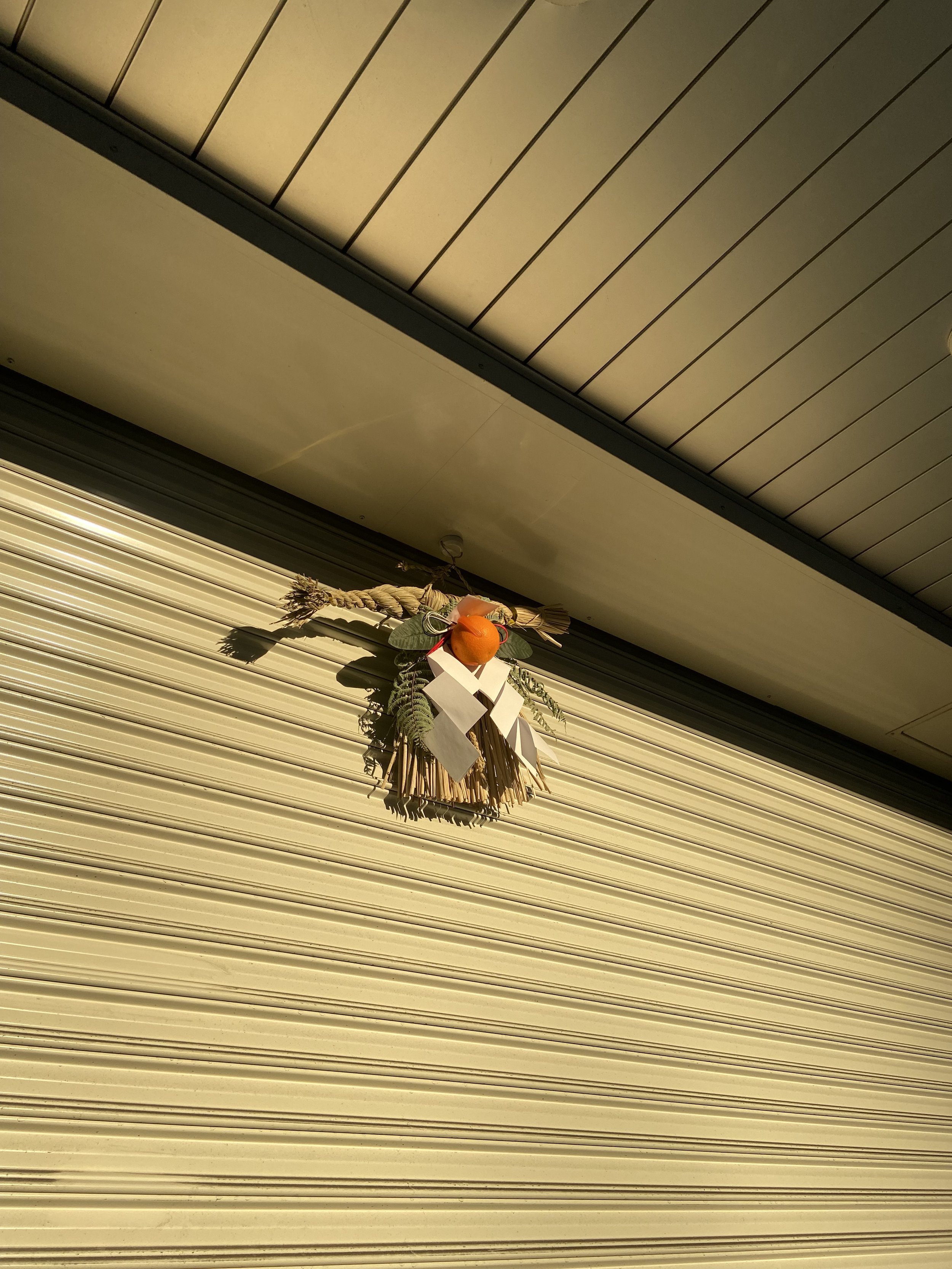
After returning back to Japan a few days into the new year, I ventured around on my bike to document these pieces called shimekazari that people hang on their homes and businesses for good luck. I’m instinctively drawn to shooting things like this that give a place its identity.


Inspired by the season, I designed up a little astrology print for my fellow Aquarians. The photo featured is from an evening jaunt pretty early in my time here in Osaka. I was, and still am, enamored with the constant treasures that the city offers.


In town from Chicago, I couldn’t miss Ratboys and their wonderful hook-filled, folk-infused indie-rock songs.


It’s my first time living somewhere with a train system, and a robust one at that. I know it won’t last forever, so I’m mindful of the blessing it is. On the elevated lines, looking out at the world, it always feels like being in a movie.


I got to see Pikomaruko, one of my favorite Osaka artists, perform again at a legendary local venue called Namba Bears. She crushed the packed room with her one-of-a-kind freakout music.


I spend huge chunks of time walking and riding my bike- an all-at-once gateway for exploring, connecting with my body, getting ideas, working through decisions, and blowing off steam. Additionally it’s a vital part of my creative process when working on songs. This track is an example of something that was pieced together this way. Write, move body, edit, move, and repeat.

This is one of the many bridges I often pass over when venturing around the city.


Kissatens, or old-school coffee houses, are portals into past decades. These wistful spaces can serve many purposes. A place to organize your thoughts. To rest. To send some overdue messages. Work out song lyrics. Or simply just somewhere to exist outside of your apartment.


The Pollux Theatre, a music venue in the iconic Nipponbashi neighborhood, is a gem of Osaka. The live house is dedicated exclusively to kawaii anime-pop artists, a truly bizarre and fascinating genre/subculture of Japan.


One of the best things about living in Japan is the access to sentos. Nothing revives your mind, body, and spirit like an hour bouncing between the sauna and cold and hot baths. Here is some golden hour light shining into the locker room.


I came across this amazing waterside shrine on the way back home after a Sunday morning venture down to Nagai Park. Always mystical energy awaiting inside the (torii) gates.


I wanted to welcome spring with a little venture out to the countryside. So, after taking a buddy’s recommendation, I decided on Hasedera, a spectacular cluster of shrines and temples tucked in a rural Nara mountainside.


There it is.

2024 first quarter in the books.

-Andy

PS. Throw your email in below to get things like this sent directly to your inbox once a month.

Andrew Armstrong
HOLIDAY PHOTO SETS UP ON ETSY

Two beautiful photo sets available now til December 31, 2023 on Etsy.

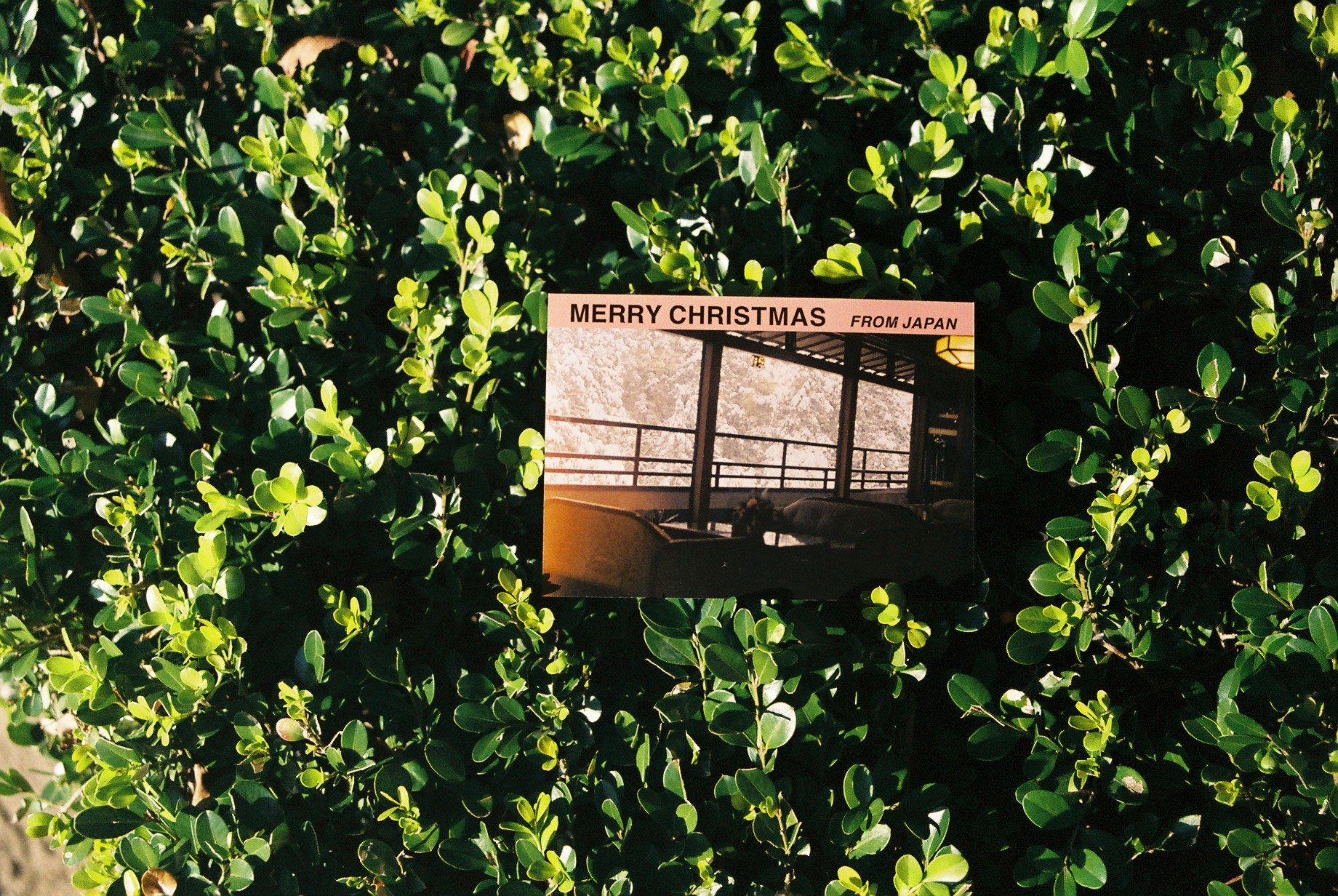
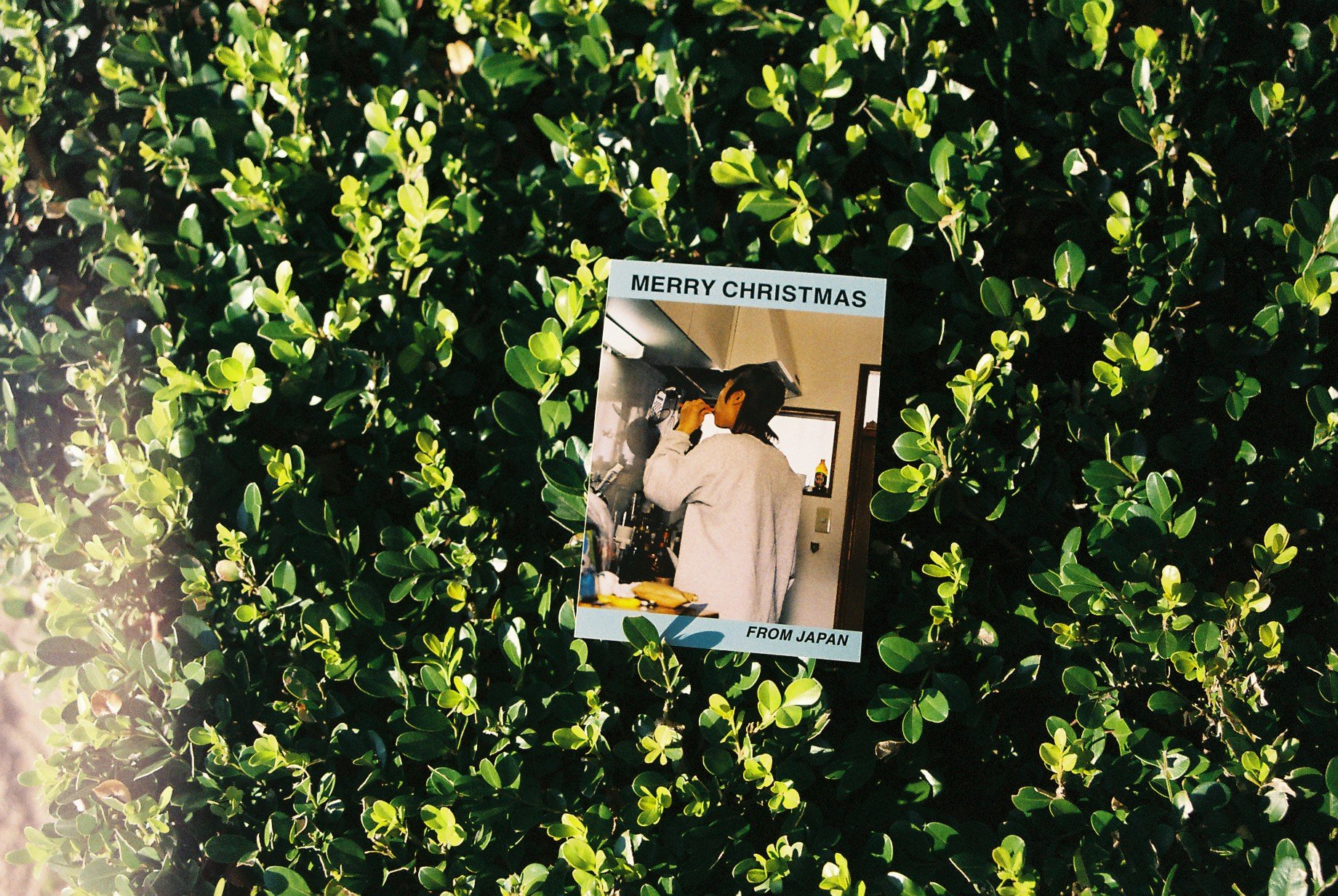
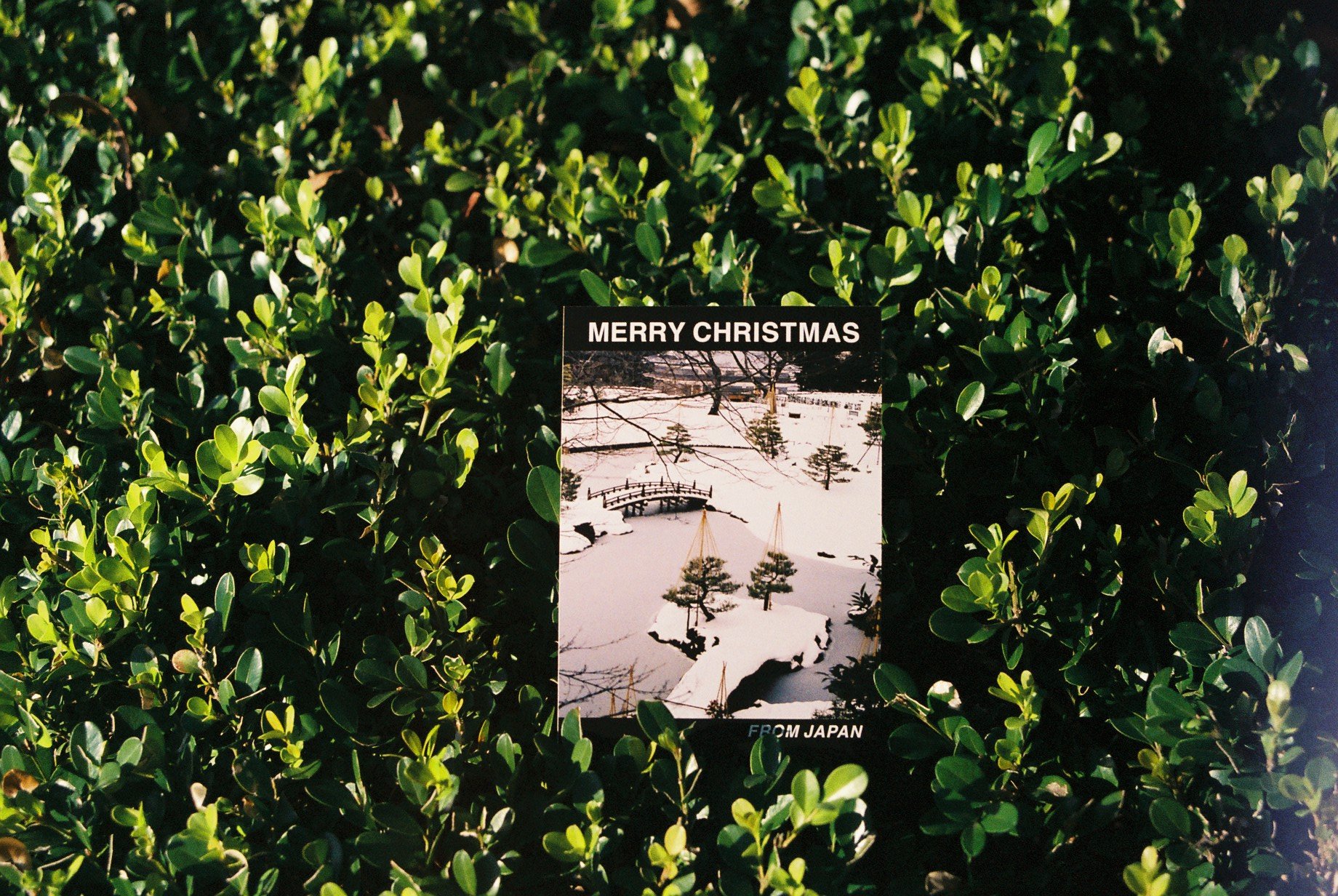
“Merry Christmas from Japan” and “Happy New Year”

The holidays in Japan can be magical.

Many people struggle to get into the spirit here during the holiday season, but luckily my experience has been different.

See, at home in Western Pennsylvania, Christmas, family, and church are intertwined. While I can’t speak for everyone, this isn’t uncommon. 

For many, the season requires some kind of church service and lots bouncing around the family tree.

Cousins from one side, and aunts and uncles from another. And of course, parents and grandparents, and siblings, nieces, and nephews.

Action-packed.

Although each year injects me with more appreciation for family, it feels like the world gives out a collective sigh when things quiet down.


Til it’s time for New Year’s mode.

When if you’re not careful, that ever-ready panic is there to deceitfully pull you into its glow. The shimmer that will leave you standing in a room you don’t want to be in as the clock hits midnight.

But fly across the world and things are flipped.

Christmas in Japan is more of a celebration of friends and romance, with a casually joyful energy that fills cities with end-of-year parties, trees covered with lights, and non-stop events.

Then on December 26th, it’s like Christmas never happened. The lights, decorations, and discount signs are taken down, as things begin to shift towards the pensive.

Of course debauchery continues, but there’s a noticeable change in the air as people begin looking ahead to their New Year’s plans.

Plans that most likely involve traveling to spend a chunk of days with family. This will also be the time that people begin visiting temples and shrines to give gratitude for the year passed and get their fortune (omikuji) for the year ahead.


This change is quite refreshing.

Though I embrace the spiritual side of the season, especially the Christmas Eve candle light service- a beautiful thing to experience- there’s something fun about being a little blissful during Christmas.

And then, less than a week later, avoiding the anxiety of New Year’s by spending it calmly and reflectively. Maybe with a nice long walk or bike ride around midnight and/or in the morning around sunrise.

I’m ready to experience holidays consistently in America again, but I will always cherish the ones I’ve had in Japan.

And I’m thankful to have rolls of film that document them.

The photos featured in these two sets are images from Osaka, Tokyo, Kanazawa, and Yamanaka Onsen over my last two winters in Japan.

They were all shot on 35mm film and developed at local film labs in Osaka city. 

I hope you can feel the spirit of the holidays in Japan through them.

Both are up on Etsy til December 31, 2023.

Andrew Armstrong
SAKUSEN 53 PHOTO SHOOT ON OSAKA ROOFTOP

Rainy season skies in Osaka are perfect for shooting on film. Luckily got to take advantage and collaborate recently with Sakusen 53, an incredible Osaka artist and producer, and get some rooftop photos. They turned out sick. Listen to her music here.

Andrew Armstrong
SPRING 2023 SHOWS

Two shows in two legendary Japan clubs coming up.

3/28 at Namba Bears in Osaka (open 7 / set time 9)

3/30 at UFO Club in Tokyo (open 7 / set time 9:30)

Andrew Armstrong
CLUB DAPHNIA PERFORMANCE PHOTOS

some sweet photos from my recent performance at Club Daphnia in Osaka. I’ve been attending events at Daphnia since moving to Japan, so was really cool to get to play there. Great space, great sound.

Andrew Armstrong